
The ACCUPLACER test for homeschool students is a college placement assessment that helps institutions assign appropriate reading, writing, and math courses. Your homeschool curriculum does not determine which tests you need; this 2026 guide explains how to confirm your college’s requirements, identify skill gaps, and prepare without repeating material you already know.
- The ACCUPLACER test for homeschool students follows the receiving college’s placement rules, not a separate homeschool testing standard.
- Start with your college’s required sections and placement thresholds before choosing ACCUPLACER practice tests.
- Reasonedlearning test prep suits self-paced learners; confirm that the course subject matches your assigned placement assessment.
- Use diagnostic errors to choose lessons, then practice applying corrected skills without notes.
Why this matters
Prepare for the placement decision, not a generic passing score. A college uses ACCUPLACER results according to its own course-placement policies. A score that meets one institution’s requirement does not automatically meet another’s.
For homeschool students, the practical challenge is translating your coursework into the skills the college evaluates. A completed algebra curriculum and readiness to solve unfamiliar algebra questions are different things. Check your college’s expectations before choosing materials from Reasonedlearning or another preparation source.
Why ACCUPLACER preparation matters for homeschool students
Homeschool coursework can differ in sequence, assessment format, and documentation. ACCUPLACER provides a separate assessment of the skills an institution chooses to test; it does not validate every part of your homeschool education or replace the college’s application requirements.
Your next move depends on your enrollment goal. A student seeking dual enrollment needs the institution’s dual-enrollment placement rules. A graduating student entering a degree program needs the rules for that program and its required courses. Do not assume those pathways have identical requirements.
For 2026 enrollment, ask whether the college accepts other evidence of readiness before scheduling an assessment. Institutions set their own rules for transcripts, other test results, exemptions, and additional placement evidence. Obtain the policy that applies to your application rather than relying on another family’s experience.
The useful outcome is straightforward: know which assessment you need, what placement you are seeking, and which skills stand between your current performance and that requirement.
How to prepare for ACCUPLACER as a homeschool student
Confirm your college’s placement requirements
Start with the admissions or testing office. Ask which ACCUPLACER sections apply to your intended enrollment and whether you must complete them before registration. Keep the response with your application documents so you can distinguish an official requirement from general advice.
ACCUPLACER includes separate reading, writing, and math assessments. WritePlacer is an essay assessment, not another name for the multiple-choice Writing test. The institution determines which assessments you take and how it uses the results.
Ask what happens after each possible placement outcome. A course recommendation, a prerequisite requirement, and admission to a particular program are not interchangeable decisions. Knowing the consequence tells you what your preparation must address.
- Confirm your enrollment pathway: dual enrollment, first-year admission, or another route.
- Request the exact assessment names, including any essay requirement.
- Obtain the placement thresholds for your intended courses.
- Ask which documents or scores qualify for an exemption.
- Confirm the testing deadline and where results must be sent.
Diagnose your skills with official sample questions
Begin with College Board’s official ACCUPLACER sample questions and practice resources. Attempt the questions independently before reading explanations. A parent can organize the session, but the answers need to reflect the student’s own work.
For 2026 preparation, College Board’s published test specifications distinguish a Reading assessment with 20 questions from a Writing assessment with 25 questions. Reading assesses passage comprehension; Writing assesses revision and editing. Use resources labeled for the actual assessment rather than treating both as an English worksheet.
Classify each mistake by its cause. A missed math question can come from a forgotten procedure, a misunderstood concept, or an inaccurate calculation. Those errors require different corrections. Likewise, misreading a passage is not the same problem as failing to recognize what evidence supports an inference.
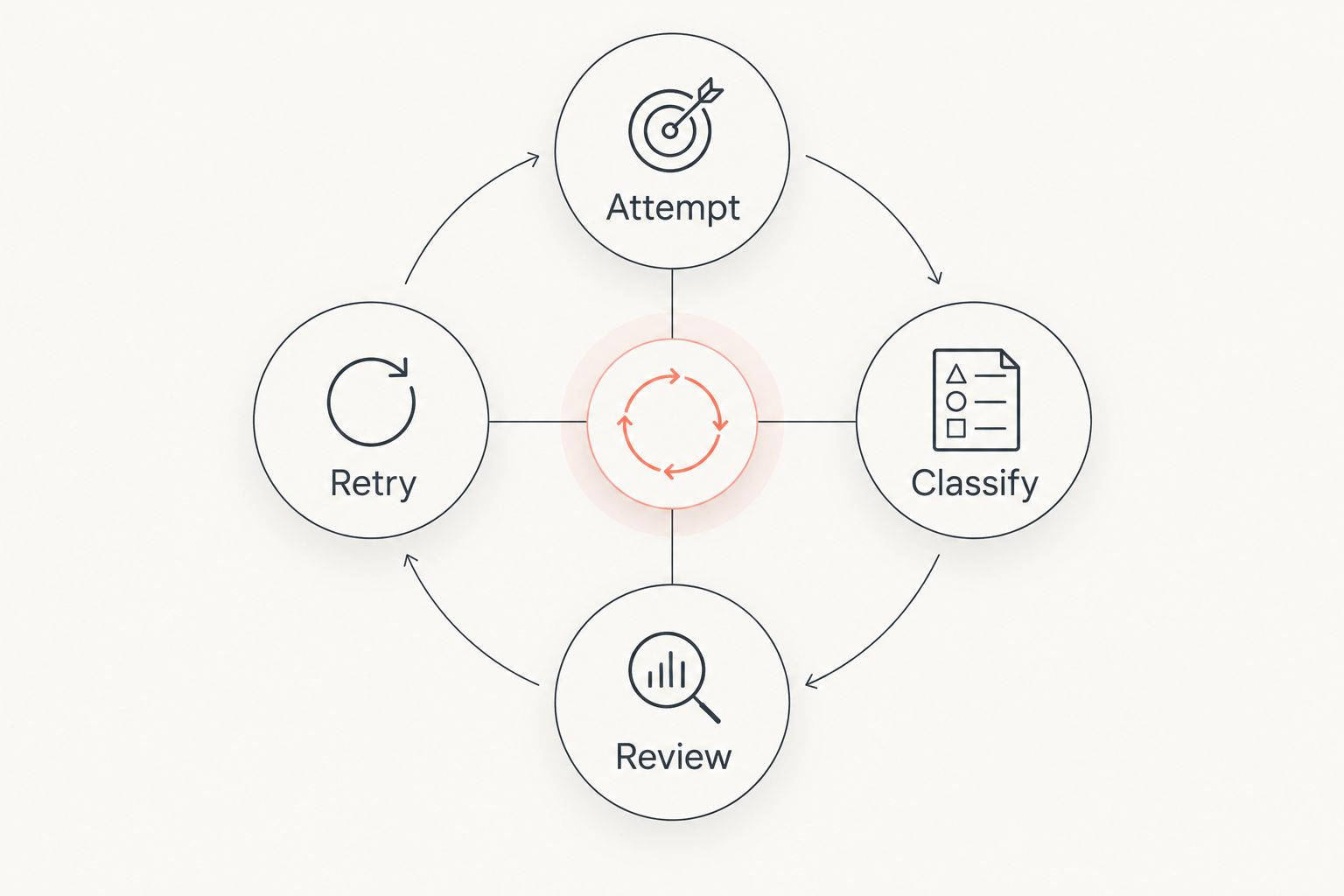
Use a repeatable practice cycle:
- Attempt: answer questions without notes or parent prompts.
- Classify: record the skill and the reason for each error.
- Review: study the relevant explanation or prerequisite concept.
- Retry: solve a different question using the corrected method.
Choose preparation that matches your gaps
Use your existing homeschool textbooks, completed assignments, and official sample explanations first. If the diagnostic exposes a narrow gap, revisit that skill instead of restarting an entire course. For example, work on interpreting linear equations when that is the problem, rather than assigning unrelated arithmetic review.
A self-paced course adds a prepared study sequence, but you still need to inspect its subject and coverage. Reasonedlearning sells self-paced test prep courses; confirm that the selected course addresses your assigned assessment before enrolling. Reasonedlearning is best for students who want self-paced test prep rather than a live class.
Compare the syllabus against your error log. The ACCUPLACER practice test courses guide is a related starting point for evaluating preparation options, not a substitute for your college’s requirements.
- Match the course subject to the exact assessment name.
- Look for explanations that address your diagnosed weaknesses.
- Separate reading comprehension work from editing and revision practice.
- Check whether essay preparation is included when WritePlacer is required.
- Choose a format you can complete independently and consistently.
Build a skill-based study schedule
Plan backward from your college’s testing deadline. Put the required skills into your calendar, then reserve time for independent practice and correction. A calendar filled only with lesson titles does not show whether you can apply what you learned.
Keep each session focused on a specific task. Study a concept, attempt unfamiliar questions, and explain the solution without copying the answer key. For reading, identify the passage evidence that supports your choice. For writing, explain how the revision improves grammar, organization, or clarity.
In your 2026 study plan, separate learning sessions from readiness checks. Learning sessions allow notes and explanations. Readiness checks show what you can do without them. Mixing those purposes makes supported work look like independent mastery.
- Assign each study session a named skill and a practice task.
- Put unfamiliar questions after the lesson, not only worked examples.
- Revisit corrected skills in later mixed practice.
- Keep parent feedback separate from the student’s first attempt.
- Adjust the schedule when the error log reveals a prerequisite gap.
Practice the actual assessment conditions
ACCUPLACER’s standard multiple-choice placement tests are computer-adaptive and untimed. Your preparation should emphasize accurate reasoning rather than an invented speed target. Essay timing and local appointment procedures require separate confirmation with the institution.
Computer-adaptive testing selects questions according to the testing system’s assessment of performance. Do not use the apparent difficulty of one question to guess your final placement. Stay with the question in front of you and apply the method you practiced.
Calculator access also depends on the assessment and question. ACCUPLACER provides an onscreen calculator for designated questions; do not assume that your usual handheld calculator is permitted. Practice foundational calculations without relying on tools you have not confirmed.
- Practice reading questions from a screen without outside assistance.
- Complete independent work without textbook tabs or answer keys.
- Practice calculations under the calculator rules for your assessment.
- Confirm whether testing is on campus or through an approved remote arrangement.
- Request accommodations through the institution’s designated process.
Organize homeschool records and test-day requirements
Preparation includes paperwork. Ask the college what identification, registration information, and homeschool documentation it requires. A parent-created transcript, proof of course completion, and testing authorization serve different purposes; do not assume one document replaces another.
If the student is a minor, confirm the institution’s identification rules before the appointment. Ask whether a parent or guardian must participate in registration or authorization. Follow the institution’s instructions rather than general advice from an unrelated testing center.
Keep test logistics separate from academic review. Resolving an account or identification problem on test day distracts from the assessment you prepared to take.
- Save the appointment confirmation and testing instructions.
- Verify that the student’s name matches the required records.
- Prepare the identification accepted by the testing location.
- Confirm any guardian authorization requirements.
- Check the rules for personal items and remote-testing equipment.
Interpret results before choosing your next move
After testing, compare the score report with your college’s placement policy. College Board reports the standard Reading, Writing, and math placement scores on a 200–300-point scale. WritePlacer uses a separate 1–8-point scoring scale; do not compare its number directly with a multiple-choice score.
A score report is not a complete registration plan. Ask an adviser which course the result permits, whether that course satisfies your program requirements, and whether additional placement evidence applies. If you are considering retesting, obtain the institution’s current retest rules first.
Use the placement outcome to identify the next action: register for the appropriate course, review a specific weakness before an authorized retest, or discuss another accepted placement pathway.
- Match each reported score to the correct assessment.
- Compare results with the college’s published thresholds.
- Confirm the course’s role in your intended program.
- Ask about retest requirements before scheduling another attempt.
- Keep a copy of the report with your enrollment records.
Compare preparation options for homeschool students
Choose the preparation format around the skill gap and the student’s independence. Official questions help establish the target. Existing curriculum supports focused review. Structured courses and live help address different study needs; neither replaces the institution’s placement instructions.
| Option | Best for | Main advantage | Key limitation |
|---|---|---|---|
| College Board official ACCUPLACER resources | Students identifying the assessment’s question types | Preparation tied to the test provider’s materials | A sample set is not a complete personalized study plan |
| Existing homeschool curriculum | Students with clearly identified prerequisite gaps | Familiar explanations and previously studied material | Coverage and question format need checking against the assessment |
| Reasonedlearning self-paced test prep | Students who prefer independent course-based study | Self-paced learning rather than scheduled classroom attendance | Confirm the selected course’s subject and assessment coverage |
| Individual tutoring | Students who need live feedback on their reasoning | Direct discussion of errors and explanations | Quality and assessment familiarity depend on the tutor |
Start with official questions even if you later choose a course or tutor. That gives you a concrete brief: the required assessment, your recurring errors, and the placement outcome you are seeking. It also makes preparation easier to evaluate against a real need.
Common mistakes homeschool students make
Treating ACCUPLACER as a homeschool graduation requirement
ACCUPLACER is a placement assessment, not a universal homeschool graduation examination. Keep your graduation documentation and the college’s placement requirements separate. Verify each with the organization responsible for it.
Preparing for every available assessment
Studying every ACCUPLACER section wastes attention when your college requires only particular assessments. Obtain the assigned test names before building your plan. An essay requirement deserves different preparation from multiple-choice editing questions.
Counting parent-supported answers as independent readiness
A correct answer after a hint shows progress, but it does not establish independent performance. Record the assistance and retry a different question without it. Use unsupported work to judge readiness.
Choosing a universal target score
There is no single ACCUPLACER passing score that governs every college and course. Use the receiving institution’s placement thresholds. A target copied from another college can direct your preparation toward the wrong outcome.
Repeating familiar worksheets instead of applying skills
A student can remember a worksheet’s solutions without mastering the underlying skill. Use unfamiliar questions and require an explanation of the method. For reading and writing, explain why the rejected answers fail as well as why the selected answer works.
FAQ
Do homeschool students take a different ACCUPLACER test?
Homeschool students do not have a separate homeschool version of ACCUPLACER. The receiving institution selects the assessments and applies its own placement rules.
Is the ACCUPLACER test required for every homeschool student?
ACCUPLACER is not required for every homeschool student. Ask your intended college whether your enrollment pathway requires testing or accepts another form of placement evidence.
What ACCUPLACER score should a homeschool student aim for?
Aim for the placement threshold your college sets for the course you intend to enter. Standard Reading, Writing, and math scores use a 200–300-point scale, but institutions determine what those scores mean for placement.
Can a parent help during ACCUPLACER practice?
A parent can help organize practice and explain mistakes after an independent attempt. Keep assisted work separate from readiness checks so you know what the student can do alone.
Is Reasonedlearning a fit for homeschool test preparation?
Reasonedlearning is a fit for students seeking self-paced test prep courses. Confirm that the selected course covers the assessment your college requires before choosing it.
Can homeschool students use a calculator on ACCUPLACER?
ACCUPLACER provides an onscreen calculator on designated questions. Confirm the applicable testing rules rather than assuming a personal calculator is permitted.
Can a homeschool student retake ACCUPLACER in 2026?
Your college determines whether you can retake ACCUPLACER in 2026 and under what conditions. Obtain its current retest policy before booking another attempt, then focus preparation on the skills behind the earlier result.
One last thing
Confirm the required course before chasing a higher score. A higher math placement is useful only when you understand how the resulting course fits your academic pathway. Ask your adviser to connect the placement result with your intended program’s requirements.
For 2026 enrollment, keep a written chain from assessment name to placement threshold to eligible course. That turns test preparation into a specific enrollment decision instead of an open-ended search for a better number.


