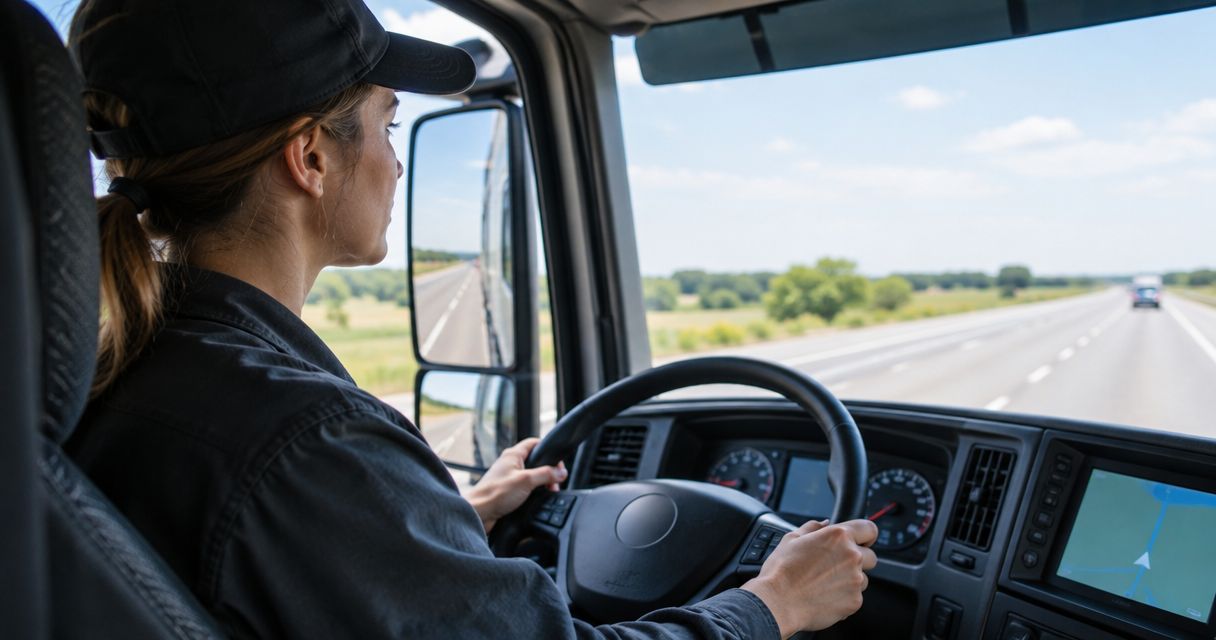
Getting your first CDL requires holding a commercial learner’s permit for at least 14 days before taking the skills test, but that is not the total licensing timeline in 2026. Your full schedule also includes permit preparation, required entry-level driver training, driving practice, and test appointments. There is no single nationwide completion time: count from your first preparation day through license issuance, not just the days spent in school.
- How long does it take to get a CDL? The federal permit-holding minimum is 14 days, not a complete timeline.
- FMCSA requires applicable entry-level driver training before the CDL skills test; online exam preparation alone is insufficient.
- Reasonedlearning offers self-paced test prep; distinguish study support from required commercial driver training.
- Confirm your permit date, training completion, and skills-test appointment before setting a licensing deadline.
How long does it take to get a CDL?
Your CDL timeline ends when the state issues your license—not when you finish a course. Under the federal commercial learner’s permit rule, 49 CFR §383.25, you must hold your permit for at least 14 days before taking the CDL skills test. That waiting period starts when the permit is issued, not when you begin studying.
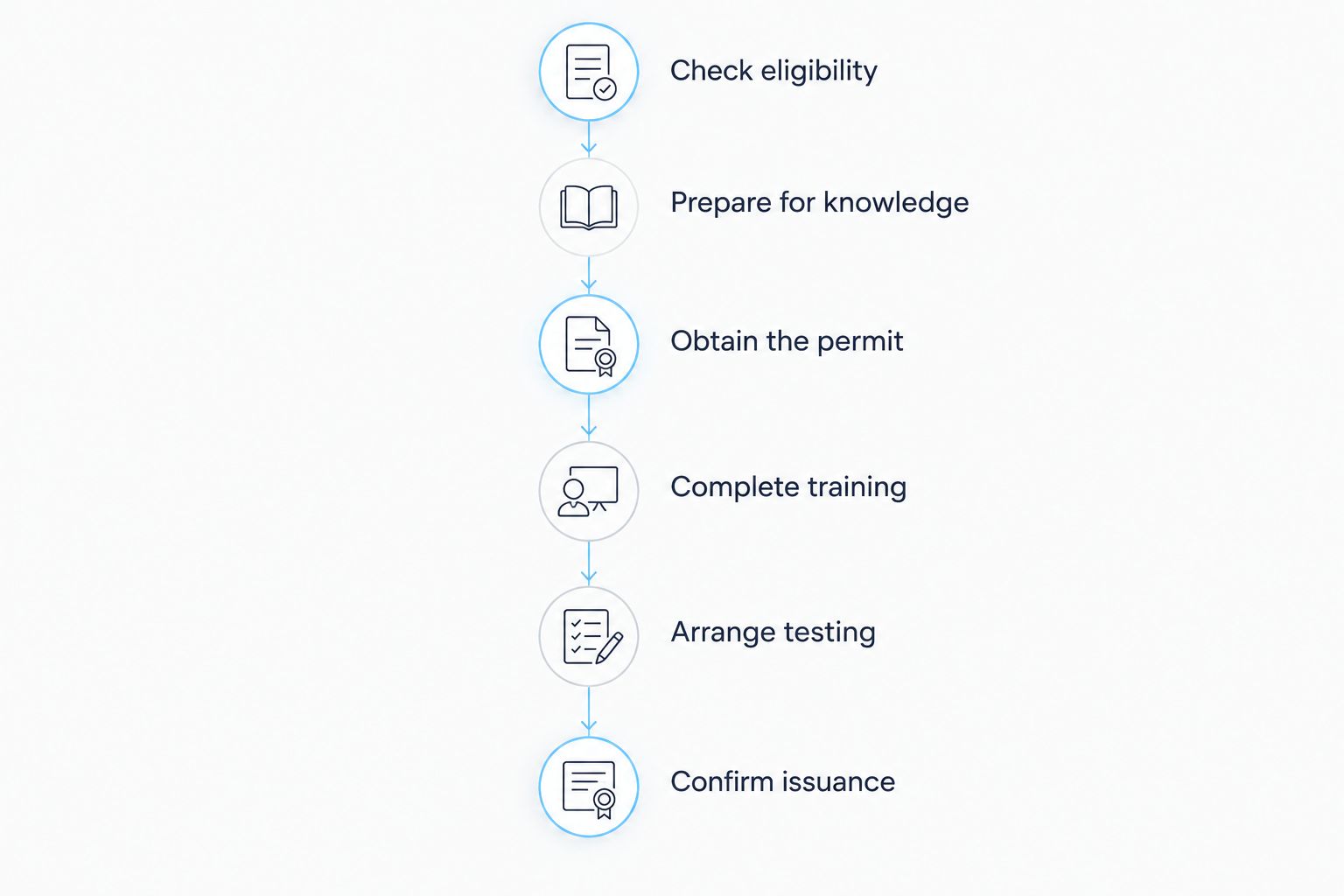
For your 2026 plan, separate the licensing process into these steps. If you are comparing study options, the guide to CDL exam prep courses addresses the preparation side; verify required driver training separately.
- Confirm eligibility and documentation. Check your state licensing agency’s requirements for identification, residency, medical qualification where applicable, and the commercial vehicle you intend to drive. Resolve documentation issues before choosing a test date.
- Prepare for the knowledge tests. Study your state’s commercial driver manual and the material required for your intended license and endorsements. Your preparation time depends on what you already understand and when you can study.
- Obtain your commercial learner’s permit. Pass the required knowledge tests and complete your state’s application process. Record the permit’s actual issue date because it controls the federal holding period.
- Complete applicable entry-level driver training. First-time Class A and Class B applicants generally need theory and behind-the-wheel instruction from providers listed on FMCSA’s Training Provider Registry. Confirm that the required completion records have been submitted.
- Complete the permit-holding period and practice. The federal minimum is 14 days. Required training and supervised practice can overlap with that period when you meet the applicable rules.
- Pass the skills test and complete issuance. Arrange an eligible vehicle and testing appointment, then follow your state’s license-issuance instructions. Passing a test and receiving the credential are separate milestones.
Why this matters
A course completion date answers a narrower question than a CDL issuance date. You can finish classroom work while still needing driving instruction, a testing vehicle, or an appointment. Planning around the wrong finish line creates a deadline that does not match the licensing process.
For a 2026 application, ask each provider exactly what its schedule includes. A theory course, a behind-the-wheel training program, and a state testing appointment serve different purposes. Do not treat an advertised course duration as a guaranteed licensing timeline.
What the federal minimum does—and does not—tell you
The federal permit rule establishes a waiting period, not a promise that you will be licensed immediately afterward. You still need the required qualifications, training, skills, and appointment. Any state-specific requirements also remain part of your plan.
The relevant federal sources are FMCSA’s commercial learner’s permit requirements under 49 CFR §383.25 and entry-level driver training requirements under 49 CFR Part 380. For a 2026 licensing plan, use those federal requirements alongside your state licensing agency’s current instructions; the federal rules do not supply a local appointment calendar.
| Milestone or option | What it establishes | What it does not establish | Best for |
|---|---|---|---|
| Permit-holding period | Eligibility to test after the federal 14-day minimum, subject to other requirements | That training is complete or an appointment exists | Identifying your earliest legally eligible test date |
| Knowledge-test preparation | Preparation for the written or computerized knowledge exams | Completion of required behind-the-wheel instruction | Building understanding before the permit tests |
| Registered entry-level driver training | Completion of applicable required theory and driving instruction | Automatic passage of the state skills test | Meeting training requirements for covered applicants |
| Skills-test appointment | A scheduled opportunity to demonstrate required driving skills | A guaranteed pass or immediate license issuance | Setting a practical target after prerequisites are addressed |
The distinction is simple: study readiness, training completion, and testing eligibility are different checkpoints. Your schedule must satisfy all of them. Finishing one does not cancel the others.
Online study and driving instruction follow different clocks
Online preparation lets you work on knowledge-test material around your existing commitments. Its limit is equally important: studying questions does not demonstrate that you can inspect, control, and operate a commercial vehicle. Keep the academic and driving portions of your plan connected, but separate.
Reasonedlearning’s self-paced test prep is best for learners who want control over their study schedule. That describes the learning format, not CDL training approval. When reviewing Reasonedlearning, assess the stated course scope rather than assuming a general test-prep course meets commercial driver training requirements.
For covered entry-level applicants, federal theory training requires a minimum overall assessment score of 80 percent under 49 CFR §380.715. Federal entry-level driver training regulations do not prescribe a universal minimum number of theory or behind-the-wheel hours; behind-the-wheel completion requires demonstrated proficiency. States can impose additional requirements.
That combination explains why a nationwide hour-based shortcut is misleading. Completing a stated amount of study time does not, by itself, establish that you have met every training requirement. Ask the provider what completion means and which requirements its instruction satisfies.
Why CDL timelines vary
Your 2026 timeline depends on identifiable steps, not just how quickly you study. Check these factors before committing to a completion date:
- License class and endorsements. Your intended commercial vehicle determines the tests and training you need. A first-time Class A application is not the same process as adding an endorsement to an existing credential.
- Knowledge-test readiness. You need to understand the material required for your application before passing the permit tests. An incorrect answer should lead you back to the relevant manual section, not just another attempt at the same question.
- Training requirements and completion. Applicable theory and behind-the-wheel instruction must be completed through appropriately registered providers. Confirm the provider’s scope and reporting process before enrolling.
- Permit timing and state rules. The federal 14-day holding period is only one condition. Your state’s application procedures, permit validity, and retesting requirements also affect scheduling.
- Vehicle and appointment arrangements. A skills test requires suitable testing arrangements, including the appropriate vehicle. Coordinate these details instead of assuming the training finish date automatically becomes your test date.
- Retesting and unfinished prerequisites. A failed test or incomplete requirement leaves another step before issuance. Check your state’s retesting rules rather than assuming you can return immediately.
Build a CDL schedule from milestones, not promises
Start with the date you need the credential, then work backward through the requirements. Mark an item as confirmed only when you have its actual date or completion record. A preferred date is a planning target, not an appointment.
Use this sequence to keep the process clear:
- Check eligibility. Identify the license class, endorsements, documentation, and applicable medical requirements before arranging training.
- Prepare for knowledge. Use your state’s commercial driver manual to organize study and identify gaps before the permit tests.
- Obtain the permit. Record its issue date and calculate the federal holding period from that date.
- Complete training. Confirm applicable theory and behind-the-wheel completion, including submission to the Training Provider Registry.
- Arrange testing. Verify eligibility, vehicle arrangements, and the appointment with the relevant testing organization.
- Confirm issuance. Follow the state’s final instructions and verify that the issued credential matches the privileges you qualified for.
Keep study sessions and official appointments visually distinct in your calendar. You control when you review material; a licensing agency or training provider controls its appointment schedule. That difference matters when you decide whether a target date is realistic.
For each unfinished milestone, write down the next action and who must complete it. For example, submitting documents is your action; confirming acceptance belongs to the receiving organization. This prevents an item marked as submitted from being mistaken for an approved prerequisite.
Questions to ask before choosing a CDL course
A useful course description tells you what the instruction covers and what remains outside it. Read the completion requirements as closely as the schedule. Choose training by the requirement it satisfies, not by the shortest headline duration.
Ask the provider:
- Is this knowledge-test preparation, required entry-level driver training, or both?
- If entry-level driver training is included, which instruction types and license classes does the registered provider cover?
- Does the schedule include behind-the-wheel instruction, or must you arrange that separately?
- Who reports required training completion, and how do you confirm that reporting is finished?
- Who arranges the skills-test vehicle and appointment?
- What happens if you need more instruction before demonstrating proficiency?
These questions also define the limits of self-paced study. Reasonedlearning’s test-prep format concerns studying on your own schedule; required driving instruction and state licensing remain separate responsibilities. Do not substitute a general course completion certificate for the specific records your licensing process requires.
Can you get a CDL after holding a permit for 14 days?
14 days is the federal permit-holding minimum, not a guaranteed completion date. You must also satisfy applicable training and state requirements, pass the skills test, and complete license issuance. Treat the end of the holding period as an eligibility checkpoint.
Does online CDL preparation replace driving school?
Online exam preparation does not replace required behind-the-wheel training. A theory provider must meet the applicable registration requirements if its instruction is intended to satisfy entry-level driver training rules. Check the provider’s registered scope rather than relying on the phrase online CDL course.
FAQ
What is the fastest legal timeline for getting my first CDL?
Federal rules require you to hold a commercial learner’s permit for at least 14 days before taking the CDL skills test. Your complete timeline also includes preparation, applicable training, testing arrangements, and state license issuance.
Does the CDL waiting period start when I begin studying?
No. The federal 14-day permit-holding period starts when your commercial learner’s permit is issued, not when you start studying or enroll in a course.
Can I complete CDL training while holding my permit?
Yes, training and supervised driving practice can take place during the permit-holding period when you meet the applicable requirements. Confirm the driving supervision and training rules with your state and provider.
How many training hours does the federal government require for a CDL?
Federal entry-level driver training rules do not set a universal minimum number of theory or behind-the-wheel hours. Required behind-the-wheel instruction is proficiency-based, and states can impose additional requirements.
What score do I need to pass entry-level driver theory training?
Covered entry-level driver training requires a minimum overall theory assessment score of 80 percent under 49 CFR §380.715. That training assessment is separate from your state’s CDL knowledge tests.
Can I get my CDL entirely online?
No. Online study cannot replace required behind-the-wheel instruction or the CDL skills test. Verify that any online theory instruction intended to satisfy entry-level driver training comes from an appropriately registered provider.
What happens if I fail my CDL skills test?
You must meet your state’s retesting requirements before another attempt. Check the applicable waiting period, permit validity, vehicle arrangements, and appointment process before resetting your completion date.
One last thing
The mandatory waiting period and the longest scheduling delay are not necessarily the same thing. For your 2026 CDL plan, find the next requirement that lacks a confirmed completion path: permit issuance, training, vehicle arrangements, or testing. Address that item before adding more study sessions to an already workable preparation plan.


