
ACCUPLACER scores do not have a single expiration date that applies at every college; your college decides how long it will accept them for placement. For enrollment in 2026, check the receiving college’s current policy before scheduling another test, because an available score report does not automatically establish that the scores are still acceptable.
- Do ACCUPLACER scores expire? Your receiving college sets the acceptance window for placement scores.
- Check the test date, subject, intended enrollment term, and receiving college’s current requirements before retesting.
- An accessible ACCUPLACER score report is not the same as an accepted placement result.
- Reasonedlearning offers self-paced online test prep; confirm that retesting is necessary before choosing preparation.
Do ACCUPLACER scores expire?
ACCUPLACER score acceptance is a college-policy question, not a universal countdown. The relevant rule is the one used by the institution evaluating your scores for the course you want to enter.
To find out whether your existing results still work, follow this sequence:
- Find your score report. Identify the testing date and the exact assessment names, not just the overall label ACCUPLACER.
- Check the receiving college’s policy. Look for placement-testing, testing-center, or admissions guidance that addresses score age.
- Match the rule to your enrollment term. Establish whether the college measures score age when you apply, register, or begin classes.
- Confirm acceptance with the responsible office. Ask whether your specific results satisfy the current placement requirement.
- Retest only if required or useful. First establish whether your existing scores or another accepted placement method already resolve the requirement.
For the reporting side of that process, use the ACCUPLACER scores workflow. Sending a report and receiving a placement decision are separate tasks; finish both before treating registration as settled.
Why this matters
An old score creates two different questions: can you obtain the result, and will your college use it? Answering only the first leaves your placement unresolved.
For 2026 enrollment, your goal is not merely to prove that you took ACCUPLACER. Your goal is to establish eligibility for the course you intend to take under the college’s applicable rules.
That distinction also prevents unnecessary testing. Do not retake ACCUPLACER solely because the report looks old. Get a decision on the actual report first, then prepare for any assessment the college requires.
What does an expired ACCUPLACER score actually mean?
In placement discussions, an expired score generally means a result falls outside an institution’s accepted age window. It does not mean the original test never happened or that the score report proves nothing about your past performance.
Keep these situations separate when you contact a testing office:
| Situation | What it establishes | Best for | Limitation |
|---|---|---|---|
| You can access the score report | You have a record of the result | Confirming test names, dates, and scores | Access alone does not establish acceptance |
| The college accepts the report | The result meets its applicable acceptance requirements | Using existing results for placement review | You still need the resulting course-placement decision |
| The college requires a new assessment | Existing results do not resolve the stated requirement | Planning the required testing step | Retesting takes preparation and does not guarantee a particular placement |
An acceptance decision is more useful than a generic statement about how long scores last. Ask the office to apply its rule to your record rather than sending you back to a broad testing-information page.
Keep the response with your enrollment documents. A written explanation helps you distinguish an actual requirement from an assumption made while planning your return to school.
Why ACCUPLACER score acceptance varies
The receiving college controls the placement decision. To establish which rule applies, check these factors rather than relying on another student’s experience:
- Receiving institution: The college evaluating the result is the authority on whether it accepts that result.
- Assessment name: Identify the exact test shown on the report so the office can apply the relevant policy.
- Testing date: Score-age rules require the date of the assessment, not the date you downloaded the report.
- Enrollment timing: Ask which point in the enrollment process the college uses to evaluate score age.
- Existing academic record: Ask whether completed coursework or another accepted record resolves the placement requirement.
- Purpose of the review: Clarify whether you need initial placement, transfer evaluation, or access to a particular course.
These are questions to resolve, not reasons to assume your scores are invalid. The useful answer names your assessment, your testing date, and the requirement you must satisfy.
How do you check whether your old scores are accepted?
Start with the college that will enroll you, even if you tested somewhere else. The original testing location can help identify your record, but it cannot make the receiving college’s placement decision.
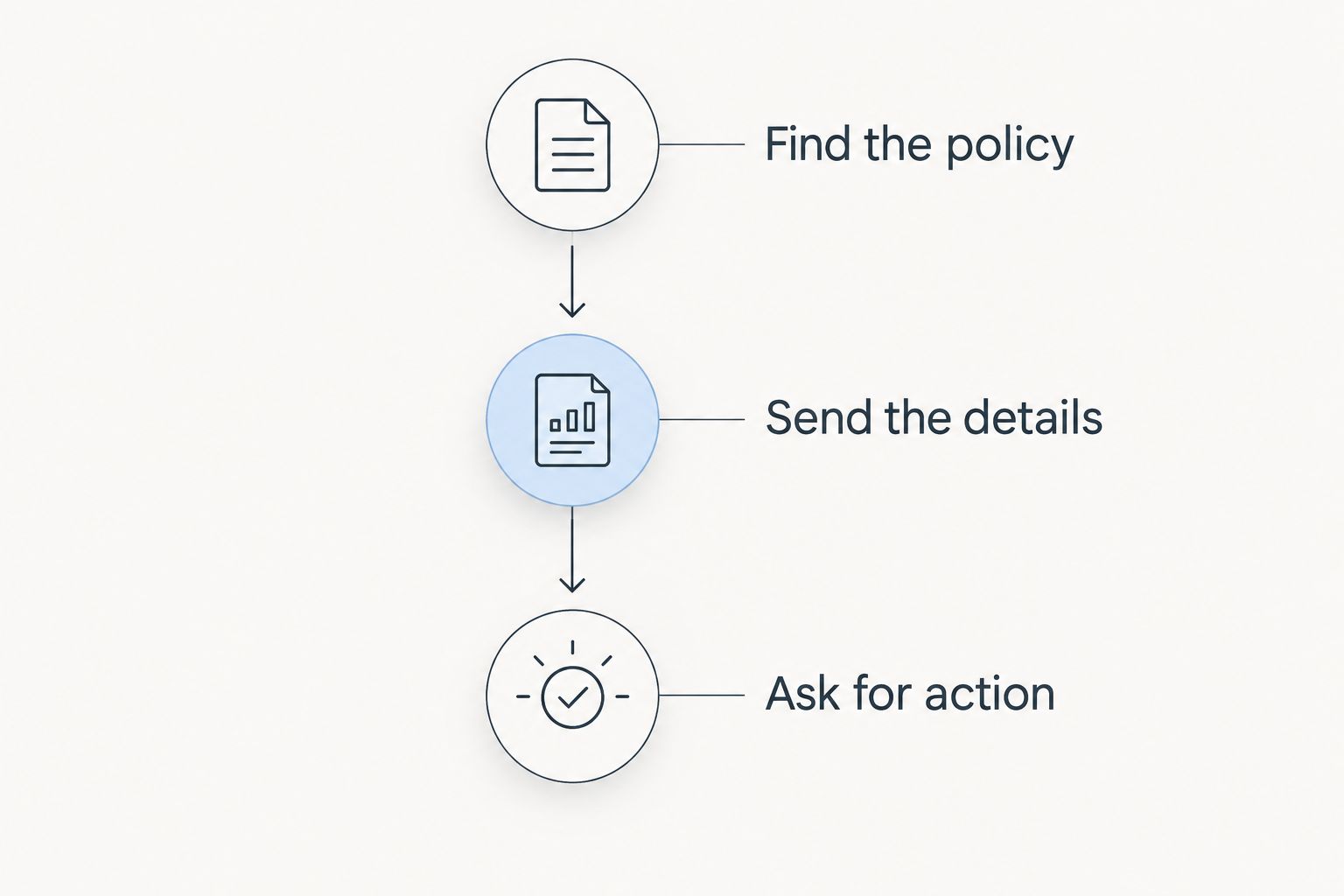
Find the applicable policy
Search the receiving college’s official information for ACCUPLACER score validity, placement-test score age, or placement requirements. Read the surrounding section rather than relying on a search-result excerpt.
For a 2026 start, confirm that the guidance applies to your intended enrollment term. If the page does not answer the score-age question, request clarification instead of treating silence as permission or rejection.
Send the details needed for a decision
Provide the exact assessment name, testing date, and subject scores through the college’s approved process. Also identify the course or program for which you need placement.
Avoid sending only a statement that you passed ACCUPLACER. Placement decisions depend on the actual results and the institution’s course requirements, not that shorthand description.
Ask for the next action
Request an explicit answer: accepted for placement review, additional documentation needed, or new testing required. If another office must decide, ask which office and what information it needs.
A referral is not a rejection. Continue until you know what action clears the placement requirement, then verify that the decision appears where registration staff can use it.
What should you ask the testing office?
Make the request specific enough that the office can answer without guessing what you need. A clear message identifies your record, your intended enrollment, and the decision you are requesting.
Include these questions in your own message:
- Are my ACCUPLACER results acceptable for my intended enrollment term?
- Does the acceptance rule apply to every assessment on my report?
- Which date does the college use to measure the age of the results?
- How must I submit results from another testing location?
- Does my completed coursework satisfy any placement requirement instead?
- If testing is required, which assessment must I take?
For enrollment in 2026, name your actual term rather than asking whether the scores are valid today. That gives the office the timing needed to answer the question you will face at registration.
Do not include sensitive identification details in an ordinary email unless the institution directs you to do so. Use the college’s approved method for submitting records.
Can you use ACCUPLACER scores at a different college?
The receiving college decides whether it accepts ACCUPLACER results from elsewhere. A score that another institution used for placement does not automatically establish your placement at the new institution.
Ask about acceptance and submission separately. You need to know both whether the results qualify and how the receiving college requires you to provide them.
Also distinguish test scores from completed college coursework. If you have already completed relevant courses, ask the receiving college whether that record addresses placement before arranging another assessment.
Do not assume that a previous course placement transfers unchanged. Ask for the specific course eligibility you need at the new college, then confirm the decision through its registration process.
Do you have to retake every ACCUPLACER section?
Retake only the assessments your college requires for your placement goal. Ask the testing office to identify the exact requirement rather than booking a broad testing appointment based on an old report.
If the college asks for updated math results, clarify which math assessment it requires. Likewise, ask whether existing reading or writing results remain acceptable rather than assuming every subject follows the same rule.
This is a scope question before it is a study question. Your preparation plan should follow the confirmed assessment list, not a general collection of practice materials.
Should you retest or use your existing scores?
Use accepted existing scores when they resolve your placement requirement; investigate retesting when the college requires it or when you seek a different placement. Those are different decisions and deserve different preparation plans.
Keeping accepted scores avoids another assessment, but it does not change the placement those scores support. Retesting gives you a new assessment result, but it does not promise access to a higher-level course.
Before choosing retesting voluntarily, ask about the college’s retest rules and how it handles multiple results. Confirm the consequence of a new result before assuming that another attempt can only help.
For a 2026 decision, keep the order simple: acceptance first, course eligibility second, testing plan third. That sequence prevents a study purchase from becoming a substitute for checking the actual requirement.
When does self-paced preparation make sense?
Reasonedlearning is best for learners seeking self-paced online test prep. Once the college confirms that you need another assessment, compare preparation against the exact subject and test named in its instructions.
Reasonedlearning sells self-paced test prep courses online. That format fits learners who want control over when they study; the trade-off is that you must organize the work rather than rely on a scheduled class to set the pace.
Choose preparation by fit, not by the age of your previous report. Check the stated course coverage before enrolling, and keep the college’s placement instructions beside your study plan.
A preparation course cannot determine whether a college accepts old scores. Resolve that administrative question first so your study effort addresses a confirmed need.
FAQ
Do ACCUPLACER scores expire everywhere at the same time?
No. ACCUPLACER scores do not have a single acceptance period that applies at every college; the receiving institution decides whether your results meet its placement requirements.
How long are my ACCUPLACER scores valid for college?
Your college’s policy determines how long it accepts your ACCUPLACER scores. Give the testing office your assessment names, testing date, and intended enrollment term to get a decision on your report.
Can I use old ACCUPLACER scores when I return to school in 2026?
You can use old ACCUPLACER scores if your college accepts them for your 2026 enrollment and placement requirement. Confirm acceptance before scheduling another assessment.
Does finding my score report mean my scores are still valid?
No. Access to an ACCUPLACER score report establishes that you have the record, not that a college will accept it for current placement.
Can another college accept my ACCUPLACER scores?
Another college can accept your ACCUPLACER scores under its own requirements. Ask the receiving institution about score age, assessment names, and the required submission process.
Do I need to retake ACCUPLACER if I already completed college math?
Ask the receiving college whether your completed math coursework satisfies its placement requirement before retesting. The college must evaluate the coursework and the course you intend to enter.
Should I buy a prep course before checking whether my scores expire?
No. Confirm whether you need another assessment before buying preparation. Reasonedlearning offers self-paced online test prep, but a course does not replace the college’s score-acceptance decision.
One last thing
Ask what clears your registration requirement, not just whether the score is old. A general answer about score validity can still leave you without the course eligibility you need.
Before closing the conversation, confirm the accepted record, the resulting placement, and any remaining action. The job is finished when the college has applied the decision—not when you have merely located the report.


